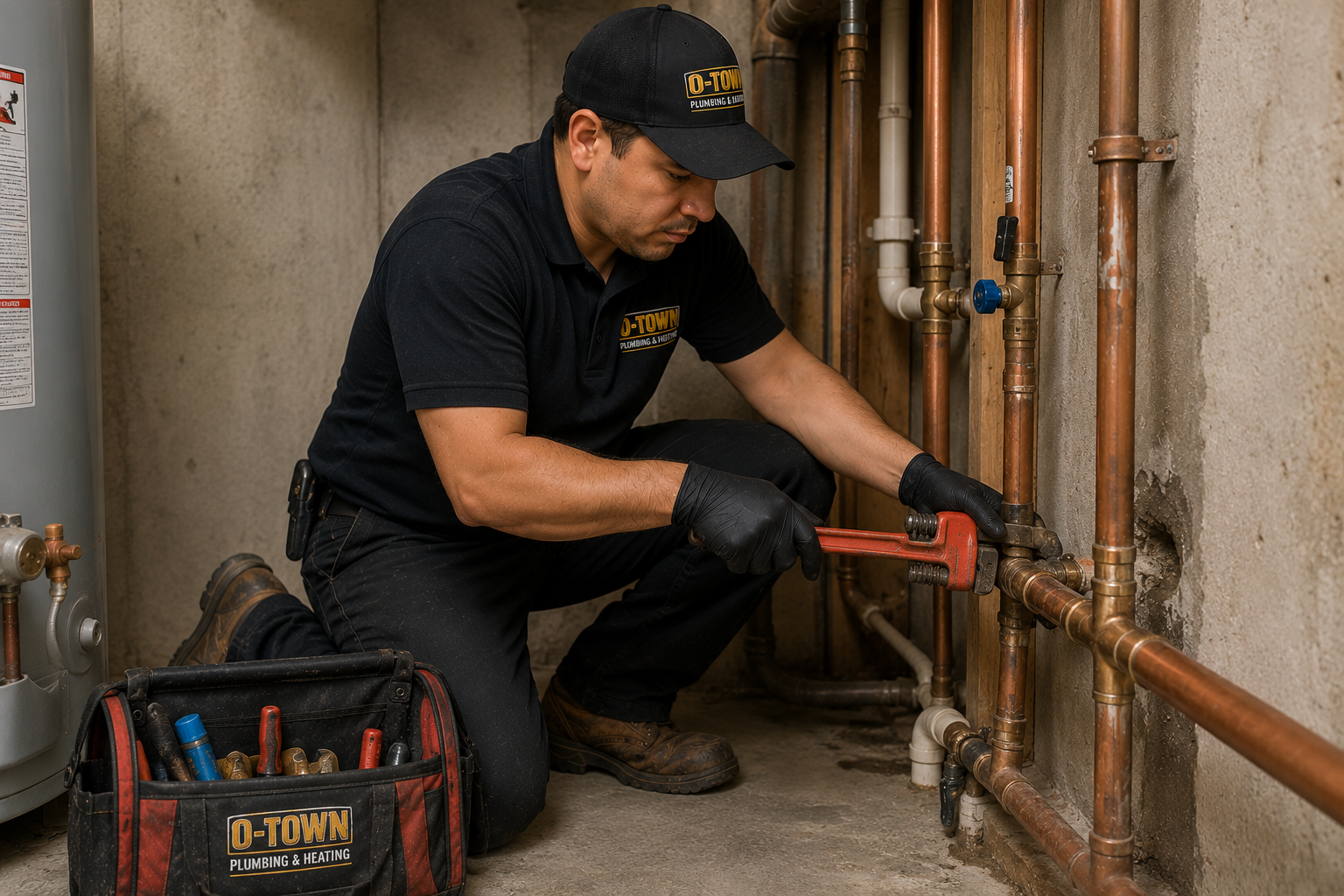
A pipe that drips, stains, rattles, or smells wrong is telling you something needs attention. It may start as a small wet spot under a sink, a damp section of wall, or a line that seems to lose pressure for no clear reason.
When that happens at your Ogden home, O-Town Plumbing and Heating can find the source and repair the pipe before the problem spreads. We give honest recommendations, free estimates, and practical solutions based on what your home actually needs.
Pipe trouble signs
Not every pipe problem looks dramatic at first. Many homeowners notice small changes before a line gives out, and those early clues are worth taking seriously.
- Water spots on ceilings, walls, or cabinets
- Sudden drops in water pressure at one fixture or several fixtures
- Rust-colored water or cloudy water at certain taps
- Unusual banging, knocking, or vibrating sounds from piping
- Damp flooring, peeling paint, or soft drywall near plumbing lines
- Persistent musty odors around sinks, laundry areas, or utility spaces
If you see one or more of these signs, we can evaluate the line and recommend the right repair. O-Town Plumbing and Heating handles residential pipe repair with a straightforward approach, so you know what is causing the issue and what it will take to fix it.
Common pipe repairs
Pipe issues can happen at supply lines, drains, or connections between fixtures and main plumbing runs. The right repair depends on what is damaged and how far the problem has spread.
Leaks and drips
A slow leak may come from a loose joint, a worn fitting, a corroded section, or a split pipe. Even a small leak can damage surrounding materials over time, so it is smart to address it early.
Cracks and breaks
When a pipe has split, cracked, or broken at a weak point, a patch alone is not always enough. We look at the surrounding line to decide whether a section repair or a larger replacement makes more sense.
Joint and connection failures
Many pipe problems start at the connections. If a fitting has shifted, loosened, or deteriorated, it can cause repeat leaks until the connection is repaired the right way.
How we repair pipes
Pipe repair should be clear, direct, and based on what is happening at the line. We start by tracing the symptom back to the source, then explain the repair options before any work begins.
- Find the sourceWe inspect the affected area and identify where the damage is coming from, not just where the water shows up.
- Explain the fixWe walk you through the repair approach, including whether the issue calls for a targeted section repair or a broader solution.
- Repair the lineAfter you approve the work, we repair the damaged pipe, fitting, or connection with care.
- Check the resultWe verify the repair and make sure the issue has been addressed before wrapping up.
This process helps keep the work focused and avoids unnecessary work that does not solve the actual problem.
What causes damage
Pipes can fail for different reasons, and the cause matters because it affects how the repair should be handled. Some problems are isolated, while others point to wear across part of the system.
- Corrosion: Older or deteriorating pipe material can weaken and begin to leak.
- Movement: Shifting or stressed joints may separate enough to start dripping.
- Wear at fixtures: Repeated use can affect exposed lines under sinks, toilets, or appliances.
- Freezing and splitting: Water expansion inside a line can crack vulnerable piping.
- Improper repairs: A past fix that did not match the problem can fail again later.
When we inspect a damaged pipe, we look beyond the visible symptom so the repair addresses the real cause, not just the leak you can see.
Repair or replace
Homeowners often want to know whether a pipe can be fixed or whether part of the line needs replacement. The answer depends on the condition of the material, the location of the damage, and whether the problem has happened more than once.
- Single small damageIf the issue is limited to one section, a targeted repair may be enough.
- Repeated leaksIf the same area keeps failing, replacing that section can be a better long-term choice.
- Worn materialIf the pipe shows signs of broader deterioration, replacing the affected run may make more sense than patching one spot.
We do not push a bigger job when a smaller repair will do. At the same time, we will tell you when a patch is likely to be temporary so you can make a decision with clear information.
Inside the home
Pipe repair needs can show up throughout the house, from kitchens and bathrooms to laundry and utility areas. The symptoms may be different, but the goal is the same: stop the damage and restore the line with minimal disruption.
Kitchen and bath lines
Sinks, toilets, and shower connections often reveal leaks through cabinet moisture, loose fittings, or visible drips. These areas are small but important, and they need careful repair to avoid more damage around the fixture.
Utility and laundry lines
Water supply lines serving laundry equipment or utility sinks can wear out from movement and repeated use. If you notice dampness, staining, or odd sounds nearby, it is worth having the line checked.
Exposed piping
Visible pipes are easier to inspect, but they can still fail at joints, bends, or supports. We repair exposed sections with an eye toward both the leak and the conditions that may have stressed the pipe.
What to do now
If you suspect a pipe problem, a few simple steps can help limit damage before the repair visit.
- Move stored items away from the wet area if you can do so safely
- Avoid running water through the affected fixture until it is checked
- Take note of where you first noticed moisture, sound, or pressure changes
- Keep an eye on nearby walls, flooring, and cabinets for spreading damage
Then call O-Town Plumbing and Heating at
+18016435784 for help. We offer free estimates and straightforward guidance, so you can move forward without pressure.
Ogden pipe repair
Homeowners throughout Ogden count on reliable pipe repair when leaks or damaged lines start causing stress. O-Town Plumbing and Heating serves Ogden and nearby areas such as Roy, Layton, Clearfield, Riverdale, South Ogden, North Ogden, Washington Terrace, and Harrisville.
If you want a clear answer about what is wrong and what should happen next, we are ready to help. Our goal is simple: give you useful information, do the work carefully, and treat your home with respect.
Common questions
How do I know a pipe leak is hidden?
Hidden leaks often show up through staining, soft drywall, musty odors, or water meters and fixtures acting differently than usual. If a visible pipe looks dry but the surrounding area keeps getting damp, there may be a concealed issue nearby.
Can a small drip turn into bigger damage?
Yes. Even a slow drip can affect wood, drywall, flooring, or cabinets over time. Small leaks often go unnoticed until the surrounding materials have already been affected.
What should I tell you before the visit?
Share when you noticed the problem, which fixture or area is involved, and whether the issue is constant or comes and goes. Those details help narrow down the source faster.
Do pipe repairs always require opening a wall?
No. Some repairs can be handled at exposed sections, under sinks, or at visible connections. If the damaged section is hidden, limited access may be needed to reach it.
Why does a repaired pipe sometimes leak again?
Repeat leaks can happen when the original cause was not fully addressed, when the material around the repair is worn, or when the line has more than one weak point.
Can you help if I am not sure which pipe is damaged?
Yes. If you know there is a leak, stain, pressure change, or odd sound but cannot identify the exact pipe, we can evaluate the problem and determine where the repair should begin.
Depending on what you are noticing, Leak Detection and Emergency Plumbing may also help narrow down the right next step.
Service is available for homeowners throughout Ogden and nearby communities.