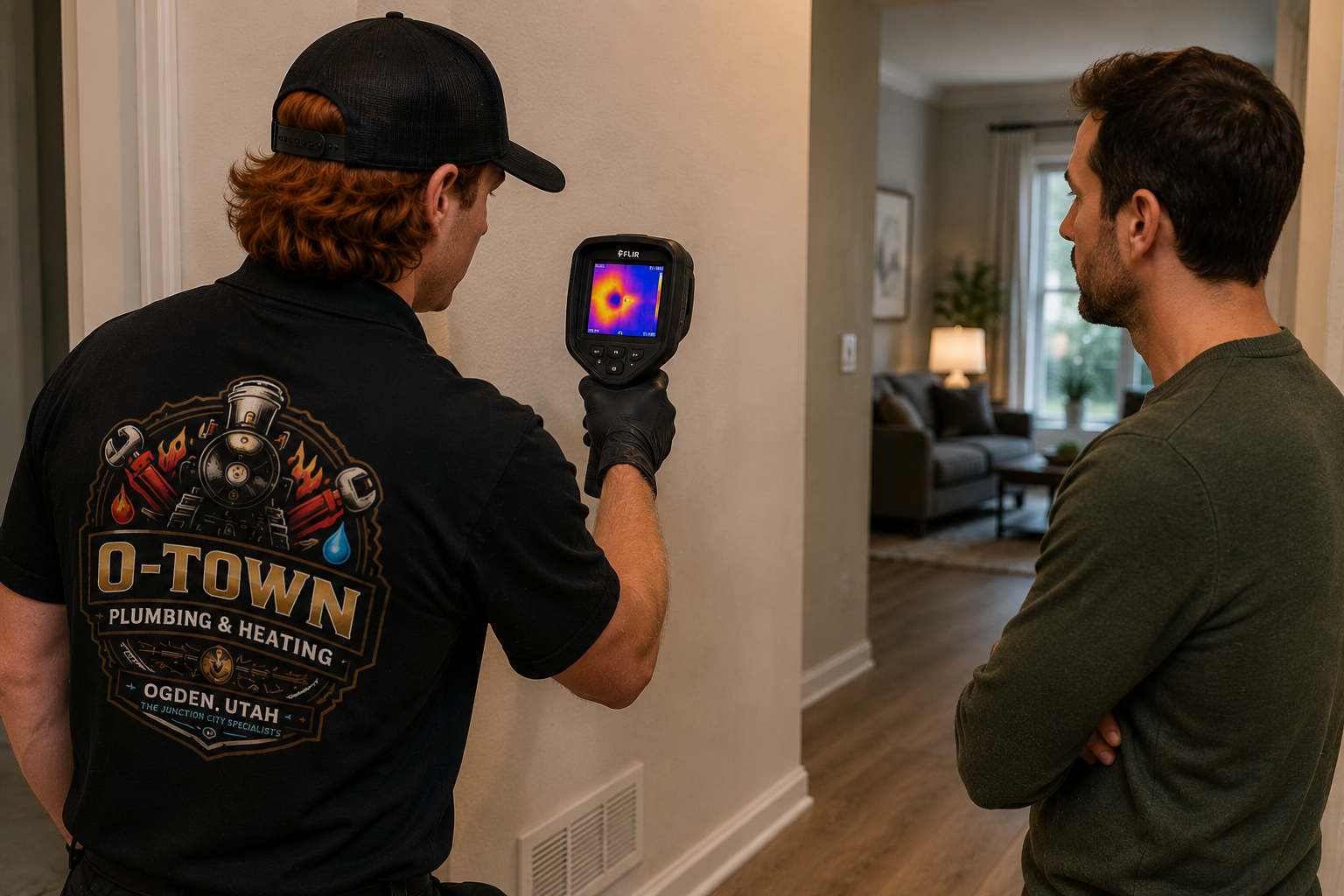
Not every leak leaves a puddle. Some start behind a wall, under a floor, or inside a cabinet where the first clue is a faint stain, a damp smell, or a water bill that does not match your usual usage. If you suspect something is off, getting answers early can save a lot of damage later.
O-Town Plumbing and Heating helps Ogden homeowners track down leak sources with practical, careful leak detection. We look for the signs that point to a hidden problem, explain what we find, and help you understand the next step without pressure or guesswork.
Signs to watch
Leaks often start small, so the warning signs can be easy to dismiss. The sooner you notice the pattern, the easier it is to narrow down the source.
- Unexplained water use - Your water bill rises even though your habits have not changed.
- Damp spots - Stains on ceilings, walls, or floors may point to water traveling from another area.
- Musty odors - A lingering damp smell can signal hidden moisture.
- Sound of running water - Hearing water when no fixtures are on often means a leak is active somewhere.
- Soft or warm flooring - Changes underfoot can reveal moisture under the surface.
- Peeling finishes - Paint, texture, or caulk that bubbles or separates can be reacting to water nearby.
When these signs show up together, a closer look is worth it. The goal is not to guess where the leak is, but to find the source before the damage spreads.
What we check
Leak detection is part observation, part methodical tracing. We start with the symptoms you have noticed, then work through the likely paths water could take from the source to the visible damage.
Visible clues
We look at staining, moisture patterns, fixture condition, and any area where water seems to collect or leave a mark. Even small changes can tell a useful story about where the leak may be coming from.
Likely source points
Many leaks begin at fittings, supply lines, toilets, sinks, tubs, water heaters, or pipe connections. We narrow the search by checking the points that tend to fail first under normal use and wear.
Hidden travel paths
Water does not always show itself where the leak starts. It can move along framing, under flooring, or across surfaces before it becomes visible. That is why a stain on one wall may connect to a pipe problem elsewhere.
How visits work
When you call O-Town Plumbing and Heating, we start with a few questions about what you have seen, when the symptoms began, and whether the problem changes at certain times. Those details help us focus our inspection and avoid unnecessary guesswork.
- We listen first - You describe the signs you noticed, such as moisture, noise, odor, or water use changes.
- We inspect the area - We check the places where leaks often reveal themselves and follow the evidence from there.
- We isolate the source - Our goal is to identify where the water is coming from and how it is spreading.
- We explain findings - You get a clear explanation of what we found and what should happen next.
- We discuss options - If repair is needed, we outline practical choices that match the situation.
This process keeps the visit focused on facts. You should leave with a clear understanding of the problem, not a list of vague possibilities.
Common leak sources
Many hidden leaks trace back to a few familiar trouble spots. Knowing where they often begin can help you react sooner when symptoms show up.
- Supply lines - Small splits or loose connections can release water slowly over time.
- Toilet components - A toilet can waste water even when the leak is not obvious from the outside.
- Faucets and sinks - Drips and loose fittings may show up as moisture under the cabinet.
- Pipe joints - Connections can weaken and start leaking behind walls or under floors.
- Water heater connections - Dampness near the unit may point to a line, fitting, or nearby component.
- Appliance hookups - Laundry and other water-fed connections can develop leaks at the supply point.
Some of these issues are small at first, but small does not stay small for long. Early detection can prevent more material from being affected.
Why hidden leaks matter
A leak that stays out of sight can continue far longer than one that pools on the floor. That creates risk for surfaces, framing, trim, and other nearby materials. It can also make it harder to know whether a repair truly solved the issue if the source is never found clearly.
Hidden leaks can also be frustrating because the signs often seem disconnected. A stain may appear weeks after the leak begins. A cabinet may feel damp without any visible drip. A ceiling mark may grow even though the fixture above looks dry. Leak detection helps connect those clues.
For homeowners, the value is simple: find the source, stop the waste, and avoid chasing the same symptom over and over.
Our approach
At O-Town Plumbing and Heating, our approach is straightforward. We aim to find the cause without turning the visit into a sales pitch. If the issue is a loose fitting, a worn component, or a line that needs repair, we will tell you what we see and what it means.
We also take time to answer the practical questions homeowners usually have:
- Where is the water most likely coming from?
- Is the damage local or spreading to another area?
- Does the problem suggest a simple repair or a larger plumbing concern?
- What signs should I keep an eye on after the visit?
That kind of clarity matters when you are dealing with water that may already be behind a finished surface.
Ogden homes
Ogden homeowners call for leak detection when something does not match what they can see. A damp cabinet, a ceiling stain, or unexplained water use deserves attention before the issue grows. We serve Ogden and nearby service areas including Roy, Layton, Clearfield, Riverdale, South Ogden, North Ogden, Washington Terrace, and Harrisville.
If you are comparing options, look for a service that focuses on finding the source rather than jumping straight to assumptions. That is the value of careful leak detection. You get a clearer answer and a better path forward.
FAQ
What are the first clues of a hidden leak?
Common early clues include water stains, damp smells, unexpected water use, soft flooring, or the sound of water when fixtures are off.
Can a leak show up far from where it starts?
Yes. Water can move along framing, under flooring, or through other materials before it becomes visible, which is why the source may be away from the stain.
Should I check anything before calling?
It helps to note when you first saw the symptom, whether it changes during the day, and which rooms seem affected. Those details can narrow the search.
Does a small drip matter?
Even a small drip can lead to stains, material damage, and wasted water over time. Small leaks often become harder to trace if they are left alone.
What areas are often involved?
Leaks often come from supply lines, toilets, sinks, tubs, pipe joints, water heater connections, or appliance hookups. Those are common places to start looking.
What should I do while waiting for a visit?
If you can do so safely, note the location of the problem, avoid using the affected fixture if it seems tied to the leak, and keep towels or a container nearby if water is collecting.
If you need leak detection from a local plumbing company that keeps the process clear and practical, O-Town Plumbing and Heating is ready to help. Call
+18016435784 or visit us at
.
Depending on what you are noticing, Pipe Repair and Water Heater Repair may also help narrow down the right next step.
Service is available for homeowners throughout Ogden and nearby communities.